
Intro
What is link building, and why does it matter for SEO? In simple terms, link building is the process of earning backlinks from reputable websites to boost your visibility and authority in search results. Each backlink is a vote of confidence. When trusted sites link to your content, search engines view your website as more credible.
For now, backlinks remain one of the primary ranking factors in Google's algorithm. But the game has changed. Now you can't just buy cheap spam links and expect results. Today, successful link building is all about strategy, authenticity, and value.
In this guide, we’ll walk you through every step of building sustainable backlinks. We'll share fundamental strategies our team at LinkBuilder.com applies to help clients improve rankings, drive traffic, and grow their online authority.
Why you need backlinks: The trust currency of Google
Link building is the practice of getting other websites to link back to yours. These links are called backlinks, and they act like digital recommendations. When a reputable site links to your content, it signals to search engines that your page is worth ranking higher in search results.
Backlinks are a key factor in establishing trust with search engines. The more high-quality links you get, the more credibility your site gains. As a result, you get better rankings, more organic traffic, and stronger authority in your niche.
High-quality backlinks can:
- Boost organic rankings by improving your domain authority.
- Drive referral traffic from readers who click through those links.
- Strengthen brand credibility by associating your site with trusted sources.
According to Google’s E-E-A-T principles (Experience, Expertise, Authoritativeness, and Trustworthiness), not all links are equal. Relevance and quality matter much more than quantity. That’s why the LinkBuilder.com team follows a strategic, quality-first approach to link building, focusing on earning links that genuinely enhance authority and long-term SEO growth.
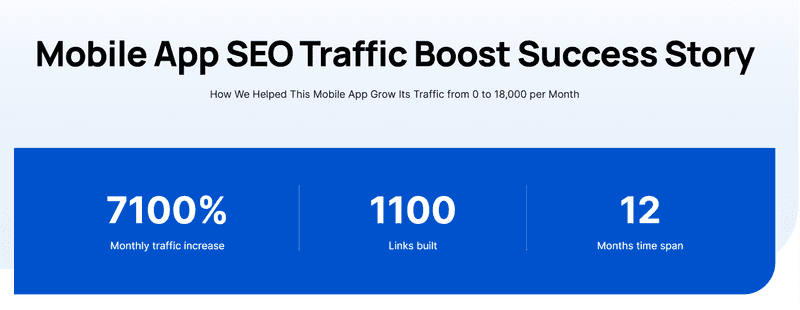
To see how data-driven content and thoughtful outreach combine for powerful results, take a look at our real-world link building results.
The All-in-One Platform for Effective SEO
Behind every successful business is a strong SEO campaign. But with countless optimization tools and techniques out there to choose from, it can be hard to know where to start. Well, fear no more, cause I've got just the thing to help. Presenting the Ranktracker all-in-one platform for effective SEO
We have finally opened registration to Ranktracker absolutely free!
Create a free accountOr Sign in using your credentials
Before link building: On-site optimization as the foundation for off-site success
Before you start earning backlinks, you must properly optimize the website from the inside. No amount of external links can help if your pages aren’t technically sound and SEO-friendly.
A well-optimized site ensures that every backlink you earn passes its full value. Here’s what to check first:
- Accurate meta titles, descriptions, and H1–H2 structure.
- Relevant content that matches user intent.
- Clear internal linking between key pages.
- No technical errors like broken links, duplicate pages, or missing canonicals.
- Fast page loading and mobile responsiveness.
When your on-page SEO is clean and efficient, your external efforts – link building, PR, outreach – become far more powerful. In other words, link building only works effectively on pages that are properly optimized.
Understanding link quality: What makes a backlink valuable
Not all backlinks are equal. Some lift your rankings, while others do more harm than good. Understanding what makes a backlink valuable is the foundation of smart link building. To further improve your site’s performance before beginning link-building, check out this guide: AI Monitoring Tools 2025: Best Software for Visibility & GEO. It explains how modern AI platforms track SEO visibility, AI-generated citations, and overall performance across different AI engines.
Here are the main factors that determine link quality:
- Domain Rating (DR) and Domain Authority (DA). These two metrics measure the overall strength and trustworthiness of a website. A backlink from a site with a high DR and DA usually carries more weight.
- Relevance to your niche. A link from a website related to your niche is far more powerful than one from an unrelated one. For example, if you run a travel blog, a backlink from another travel or lifestyle site will help much more than one from a tech blog.
- Placement within the content. Links placed naturally within the main body of an article (we call them contextual links) are much stronger than those hidden in a footer or sidebar.
- Anchor text diversity. The clickable text of a link – the anchor – helps Google understand what your page is about. A natural backlink profile typically includes about 70-80% non-anchor (generic or branded) and 20-30% keyword-rich links. Here are some examples of anchor types:
- Branded: “LinkBuilder.com”
- Generic: “Read more,” “visit the website”
- Partial match: “link building strategies”
- Exact match (used sparingly): “buy backlinks”
- Dofollow vs. nofollow balance. Dofollow links pass SEO value to your site, while nofollow links don’t – but both are useful. A natural backlink profile includes both.
You can check which backlinks you already have using the Backlink Monitor tool. It will show your backlinks and how many of them are dofollow and nofollow.
Don’t forget that a healthy backlink profile looks organic, not manufactured. To keep it that way:
- Mix branded, URL, and non-commercial anchors.
- Get links to internal pages (blog posts, case studies, products), not just the homepage.
- Use diverse sources – blogs, media, directories, social platforms, forums.
- Build links gradually, avoiding sudden spikes that look suspicious.
Consistency and patience make your growth look authentic in Google’s eyes.
The most effective backlink types: Where quality meets strategy
Google continues to reward links that look natural, come from trusted sources, and add genuine value to readers. Here are the most effective types to focus on:
- Guest Posts – publishing expert content on niche websites to build authority and attract targeted traffic.
- Niche Edits – adding contextual links into existing articles with relevant topics and organic engagement.
- Crowd Marketing – natural mentions on forums, Q&A platforms, and discussions that strengthen brand presence.
- Business Directories & Profiles – posting listings on trusted platforms that boost local visibility and brand credibility.
- Digital PR & HARO – earning backlinks from media outlets and news sites through expert commentary.
- Reddit & Quora Mentions – increasing E-E-A-T signals and brand awareness through genuine participation in discussions.
Reddit is particularly influential since Google has a content partnership with the platform. Even though most links are nofollow, Reddit discussions boost brand visibility, entity recognition, and trust – which indirectly improves SEO performance.
The All-in-One Platform for Effective SEO
Behind every successful business is a strong SEO campaign. But with countless optimization tools and techniques out there to choose from, it can be hard to know where to start. Well, fear no more, cause I've got just the thing to help. Presenting the Ranktracker all-in-one platform for effective SEO
We have finally opened registration to Ranktracker absolutely free!
Create a free accountOr Sign in using your credentials
Google representatives have even acknowledged that unlinked mentions (brand names without hyperlinks) can help identify and evaluate brand authority. (Source: Gary Illyes, Reddit AMA)
The best link-building results come from combining these methods into a balanced, authentic strategy.
Gaining backlinks: Step-by-step link building strategy
Building a strong backlink profile is a lengthy process that requires a strategic approach, consistency, and patience. Whether you're starting from scratch or refining your current SEO approach, a structured plan makes all the difference.
We'll walk you through the five essential steps that make up a practical, modern link-building strategy – the same approach that we use at LinkBuilder.com for long-term success. We’ll also give you some valuable tools for the main steps.
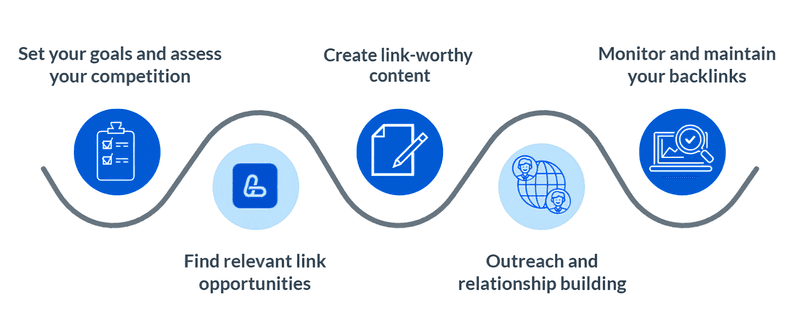
Let’s unravel every step.
Step 1: Set your goals and assess your competition
Before you start building links, you need to know what success looks like. Define specific, measurable goals for your campaign. For example:
- Increase organic traffic by 30% in six months.
- Improve your Domain Rating (DR) from 40 to 60.
- Achieve top-three rankings for your target keywords.
Clear objectives help you stay focused and measure progress along the way.
Next, take a close look at your competitors. Study the top 10 competitors in Google for your main keywords and analyze where their backlinks are coming from. Tools like Ahrefs, Semrush, Serpstat, or Backlink Checker can show you the number, quality, and types of links pointing to their pages.
Use tools to analyze:
- Where do the competitors’ backlinks come from (domains, DR/DA, link type)?
- Which pages attract the most backlinks?
- What content and link types perform best?
Group their backlinks by type – guest posts, niche edits, business directories, forums, etc. Identify the strongest and most relevant donor sites.
Then, build your own strategy by replicating what works and improving it:
- Reach out to the same high-quality websites.
- Add more diverse, natural link sources.
- Focus on valuable, expert-level content instead of volume.
Competitor analysis is essential for creating a successful, budget-friendly, and sustainable strategy. You can think of it as using premium fuel before takeoff. Without it, your campaign won’t get very far.
Step 2: Find relevant link opportunities
Once you know where you stand, it’s time to find places where your links truly belong. Not every website is worth reaching out to – the goal is to build backlinks that are both relevant and authoritative.
You can start by using Google search operators like:
- intitle:"resources" + your keyword – to find resource pages.
- inurl:links + your topic – to locate curated link lists.
- “write for us” + your keyword – to uncover guest posting opportunities.
Look for industry directories, professional associations, and niche blogs that publish external contributions.
In addition to manual searching, you can analyze your competitors. Simply export their backlink profile, upload it to our internal tool, and get a full list of their referring domains with cost estimates. This allows you to quickly pinpoint the most cost-effective placements, potentially saving you a lot of money since prices for similar links can vary by 5 to 10 times.
To ensure your links deliver real value:
- Check domain traffic (at least 500+ monthly visitors).
- Review the site’s history via Wayback Machine or similar tools.
- Inspect outbound links for spam or irrelevant content.
- Make sure the site publishes fresh content regularly.
- Avoid inflated metrics or “dead” blogs – they may collapse after the next Google update.
High-quality donors ensure your backlinks remain valuable and safe.
If you want to discover trusted websites that accept guest posts and sponsored content, try the Sponsored Content Finder – a practical tool from LinkBuilder.com that helps you locate high-quality, relevant websites for effective link outreach.You can filter the database by country, category, DR, DA, traffic, prices, and more to find the best donor for your project.
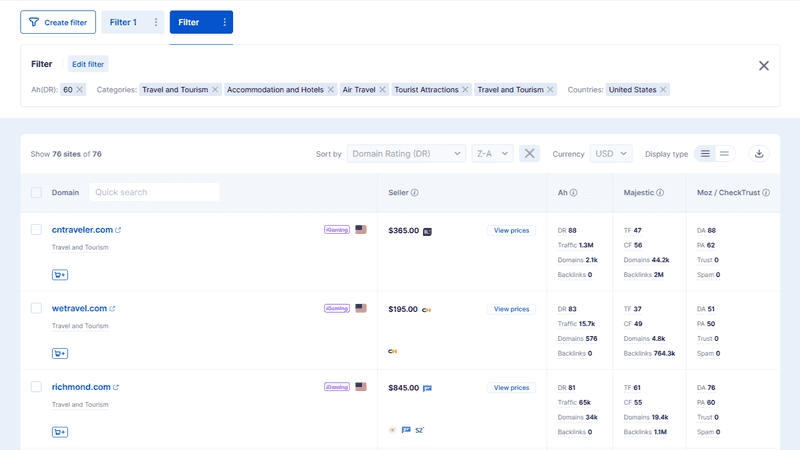
When evaluating a potential site, consider:
- Does it have real organic traffic?
- Is its content related to your niche?
- Are the links relevant and natural?
- Does the site have a strong DR or DA?
This saves time and ensures you’re targeting reputable sources rather than low-value sites that could harm your SEO.
Step 3: Create link-worthy content
Good content is the foundation of any successful link-building campaign. If you want people to link to your website, give them something worth linking to. Focus on creating resources that offer genuine value to readers.
To secure top rankings, you need to start with content that truly outshines the competition. This means developing a definitive resource with more facts, current data, and real-world case studies. This strong, versatile text is crucial for placement on various donor sites. Then, strengthen it further by linking to authoritative sources and niche experts – this enhances the article's credibility and drives it to the top of the rankings.
Here are some of the most effective content formats for attracting backlinks:
- Data studies and statistics. Publish original research or surveys that others in your industry can reference.
- Guides and tutorials. Comprehensive, step-by-step guides tend to attract natural links because they provide lasting value.
- Infographics. Visual content is widely shared and can generate backlinks from blogs and news outlets.
- Expert roundups. Gather insights from respected professionals in your field. Participants often share and link to the final piece.
Ensure your content aligns with search intent and incorporates fresh data or a distinctive perspective. Over time, this type of “evergreen” content becomes a link magnet.
When you publish guest posts or expert content on other websites, don’t just leave them there – promote those articles like your own:
- Optimize the article for SEO and visuals.
- Share it on social media and communities.
- Drive traffic and encourage engagement.
If your post appears on a site with 50,000+ monthly visits, it carries much more authority, especially when it ranks and draws organic traffic. By promoting those pages, you’re not just building links – you’re creating real visibility and referral traffic that naturally boosts your own site.
Step 4: Outreach and relationship building
Even the best content won’t earn links on its own – you have to promote it. Outreach is the process of building relationships with site owners, editors, and content creators in your niche.
Here’s how to do it effectively:
- Personalize every message. Avoid mass emails and AI-generated messages. Mention something specific you liked about their website or article.
- Be clear and concise. Explain why your content adds value to their readers.
- Offer mutual benefit. Don’t just ask for a link – offer a helpful resource, a collaboration opportunity, or a guest post idea.
- Follow up politely. Many links are won in the second or third message, not the first.
Authentic communication builds trust and can lead to long-term relationships that go beyond a single backlink.
Step 5: Monitor and maintain your backlinks
After you’ve started earning links, your job isn’t done. It’s important to track your progress. Use backlink monitoring tools to keep an eye on new and lost links. If you notice high-quality backlinks disappearing, reach out to the site owner to see if they can be restored.
You should also watch for toxic links – low-quality, spammy sites that link to you without consent. When you discover such a link, your best bet is to first reach out to the site owner and ask them to take it down. You can also use the Google Disavow Tool, but it is less reliable and won't always fix the problem.
As a rule of thumb for your link reclamation outreach, if you hear back from even roughly half of the sites after your initial contact, that's a fantastic response rate.
Regular backlink audits ensure your profile stays healthy and diverse. The Rank Tracker tool can help you see how your keywords and rankings improve as your link profile grows. Tracking these trends helps you understand what’s working and where to focus next.
A solid link-building strategy takes time. However, with clear goals, effective prospecting, high-quality content, genuine outreach, and regular monitoring, you can create a backlink profile that drives lasting growth and authority in search.
The best tools to make link building easier and more effective
Successful link building isn’t just about outreach and creativity. It’s also about using the right tools to save time, stay organized, and measure your results.
Here is a quick overview of some of the most useful platforms that simplify every stage of the process, from research to monitoring.
| Category | Tool | How it helps |
| Competitor & backlink analysis | Ahrefs / Semrush / Serpstat / Moz | Analyze competitor backlinks, find link opportunities, and assess domain quality. |
| Finding potential donors | Ahrefs / Semrush / Serpstat / Moz | The same tools that are used for competitor analysis are also suitable for finding potential donors. They allow you to examine backlink profiles and filter websites by metrics. |
| Contact finding and outreach | Hunter.io / Snov.io | Find contact emails and manage outreach lists. |
| Performance tracking | Rank Tracker / Google Search Console / Ahrefs / Semrush / Serpstat / Moz | Track how your new backlinks affect keyword rankings and organic traffic growth. |
| Organization & collaboration | Google Sheets / Notion / Trello | Keep outreach data, link status, and communication organized in one place. |
As you can see, some tools can be used for multiple purposes. It's handy – that way you have everything in one place.
The All-in-One Platform for Effective SEO
Behind every successful business is a strong SEO campaign. But with countless optimization tools and techniques out there to choose from, it can be hard to know where to start. Well, fear no more, cause I've got just the thing to help. Presenting the Ranktracker all-in-one platform for effective SEO
We have finally opened registration to Ranktracker absolutely free!
Create a free accountOr Sign in using your credentials
When you combine the right tools with a clear strategy, link building becomes much more efficient – and your campaigns start delivering measurable, lasting results.
What not to do in your link-building strategy: Common mistakes even professionals make
Unfortunately, it’s easy to make mistakes in your link building that can undo your hard work or even harm your site’s reputation. Google’s algorithms are constantly evolving – strategies from 2-3 years ago don’t work today. It’s hard to keep up sometimes.
Here are some of the most common link-building mistakes – and how to avoid them:
- Buying cheap or spammy links. Low-quality links from irrelevant or spammy websites can trigger penalties – Google is really good at identifying them. Always focus on earning links from reputable sources.
- Overusing exact-match anchor text. Using the same keyword-rich anchor repeatedly looks unnatural and manipulative. Add more diversity in your anchors: use branded, generic, and partial-match phrases to keep your profile authentic.
- Linking only to the homepage. Spread your backlinks across key internal pages to strengthen your overall domain.
- Using the same donor sites repeatedly. Over-reliance on one source looks unnatural and reduces link equity. Unique donors are important – aim to get links from new unique domains rather than increasing the number of links from the same site.
- Publishing on sites with no real audience. Prioritize thematic sites. They provide much greater impact than irrelevant platforms with merely formal traffic.
- Placing links in irrelevant content. Ensure that your backlinks appear naturally within contextually related content.
- Choosing domains with fake or declining traffic. Always check the site’s organic trend and authenticity before placing a link.
- Rushing to publish low-quality articles. Poor-quality text may not get indexed or may eventually drop out of the index – and the link will stop passing any value.
- Focusing on quantity instead of quality. A handful of strong, contextual links will always outperform dozens of weak ones.
- Failing to track link outcomes. Monitoring links may sound boring, but it is a crucial part of link building. Audit your backlinks regularly and track their impact on traffic and rankings, so you can refine your strategy over time.
As algorithms evolve, the fundamentals remain the same: links are built, not just bought – and trust is earned, not manufactured. Keep that in mind and you’ll get the best results from your link-building efforts.
Bonus: Quick link building checklist for beginners
Here’s a simple checklist to help you stay organized and consistent when launching your link building campaign. Follow these steps to make sure every part of your strategy is covered – from research to tracking results.
Mini checklist for launching your link building campaign:
- Analyze the top 10 competitors.
- Complete on-site optimization.
- Define your link strategy and select link types.
- Choose your tools and set up a donor database.
- Prepare your outreach campaign and contact list.
- Create and optimize your link-worthy content.
- Negotiate placements and secure discounts.
- Promote guest posts and earned mentions.
- Set up backlink monitoring and reporting.
- Review and adjust your campaign performance every 2–3 months.
Consistent tracking and small improvements over time make a huge difference – successful link building is a marathon, not a sprint.
Final thoughts
At its core, link building isn’t just about getting as many backlinks as possible – it’s about quality, relationships, and consistency. The best results come from building genuine connections, creating valuable content, and staying patient as your authority grows naturally over time.
Sustainable link building means focusing on relevance and authenticity rather than quick wins. Every link you earn should make sense for your audience, add value to the web, and strengthen your brand’s credibility. This is the guiding principle behind everything we do at LinkBuilder.com.

